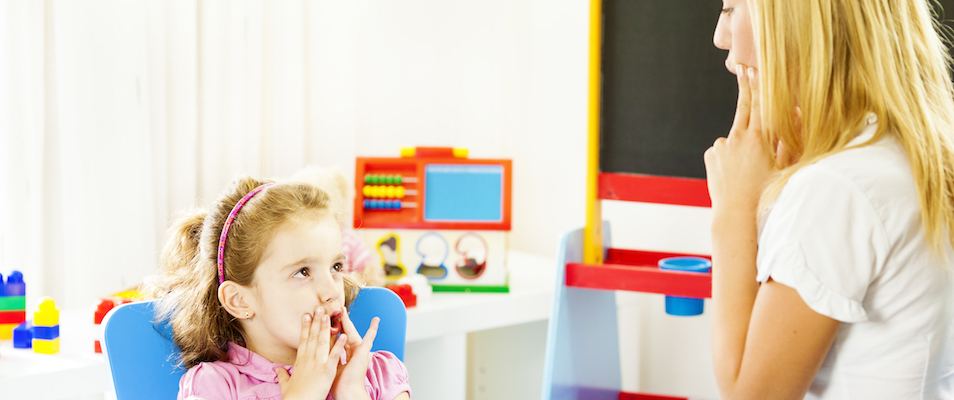
Language
When a person has trouble understanding others (receptive language) or sharing thoughts, ideas, and feelings (expressive language), they may have a language disorder. Language is made of socially shared rules, including what words mean, how to make new words, how to put words together, and which combinations fit a situation.
Pragmatic language
Speech-language pathologists also serve children with pragmatic language disorders — difficulties with social language such as eye contact, staying on topic, reading subtle cues, interpreting facial expression, understanding jokes or non-literal language, and relating to peers.
Speech
When a person cannot produce speech sounds correctly or fluently, or has problems with voice, they may have a speech disorder.
- Articulation — how speech sounds are made (for example, producing “r” in “rabbit” rather than “wabbit”).
- Voice — use of the vocal folds and breathing to produce sound. Overuse or misuse can lead to hoarseness or loss of voice.
- Fluency — the rhythm of speech, including hesitations or stuttering.